

Acknowledgement to Reviewers of Journal of Atmospheric Science Research in 2025
2026-01-22









ISSN: 2630-5119 (Online)
Vol. 9 , Iss. 3 (July 2026): In Progress

 , Naresh Chandra Gupta
 1395 (Abstract)
 414 (Download)
Abstract: This study presents a multi-year satellite-based assessment of atmospheric pollution over Singrauli, Madhya Pradesh, India's largest coal-industrial cluster using Sentinel-5P (TROPOMI) retrievals for 2019–2024. Concentrations of CO, NO₂, SO₂, O₃, HCHO, Cloud Fraction, UV Aerosol Absorbing Index (UV-AAI), and surface solar irradiance (NASA POWER) were analysed using Google Earth Engine (GEE), with spatial visualization performed... More
 , Yifeng Wang, Boris Faybishenko
288 (Abstract)
137 (Download)
, Yifeng Wang, Boris Faybishenko
288 (Abstract)
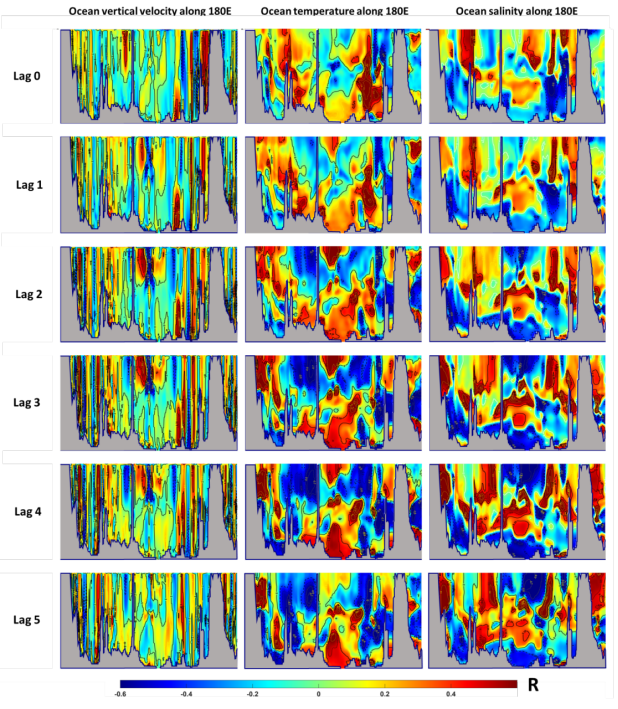
137 (Download)Abstract: A meridional dipole, centered near 180° E, characterizes solar correlations to oceanic and atmospheric parameters—salinity, ocean vertical velocities, temperatures, atmospheric moisture, winds, cloud cover, geopotential heights, carbon dioxide (CO2) fluxes, and ozone (O3)—over several years of lag, with opposing correlation signs on either side of the dipole axis. Ocean correlations are stronger and more persistent than... More
 , Vinay Kumar, Chitranjan Pandey, Sourabh P. Bhat, Shainath Kalamkar, Bipin Kumar
29 (Abstract)
28 (Download)
, Vinay Kumar, Chitranjan Pandey, Sourabh P. Bhat, Shainath Kalamkar, Bipin Kumar
29 (Abstract)
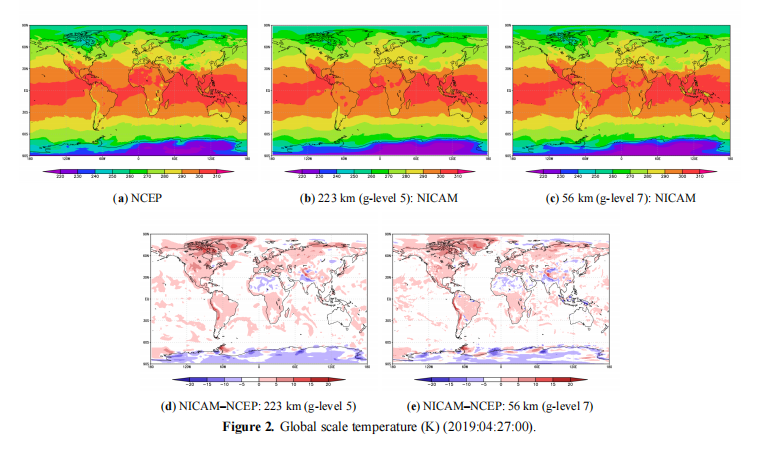
28 (Download)Abstract: A persistent discrepancy between mathematically modeled atmospheric circulation and observed precipitation has become increasingly evident over recent decades. High-resolution numerical weather prediction (NWP) models offer a pathway to reduce this gap, yet their practical deployment is constrained by limited data availability, high computational cost, and reliance on traditional model verification measures. This study proposes an... More